最近,天衡有了一次從不同角度認識自己作品的機會。非常感謝台灣清酒暨燒酎協會(TSSA)的協助,讓天衡有機會參與日本 TDK 的清酒風味分析測試,也謝謝 TDK 兼森先生與團隊的投入,讓我們得以透過科學數據,重新觀察自己釀造的酒。
當天衡遇上TDK日本酒感測系統
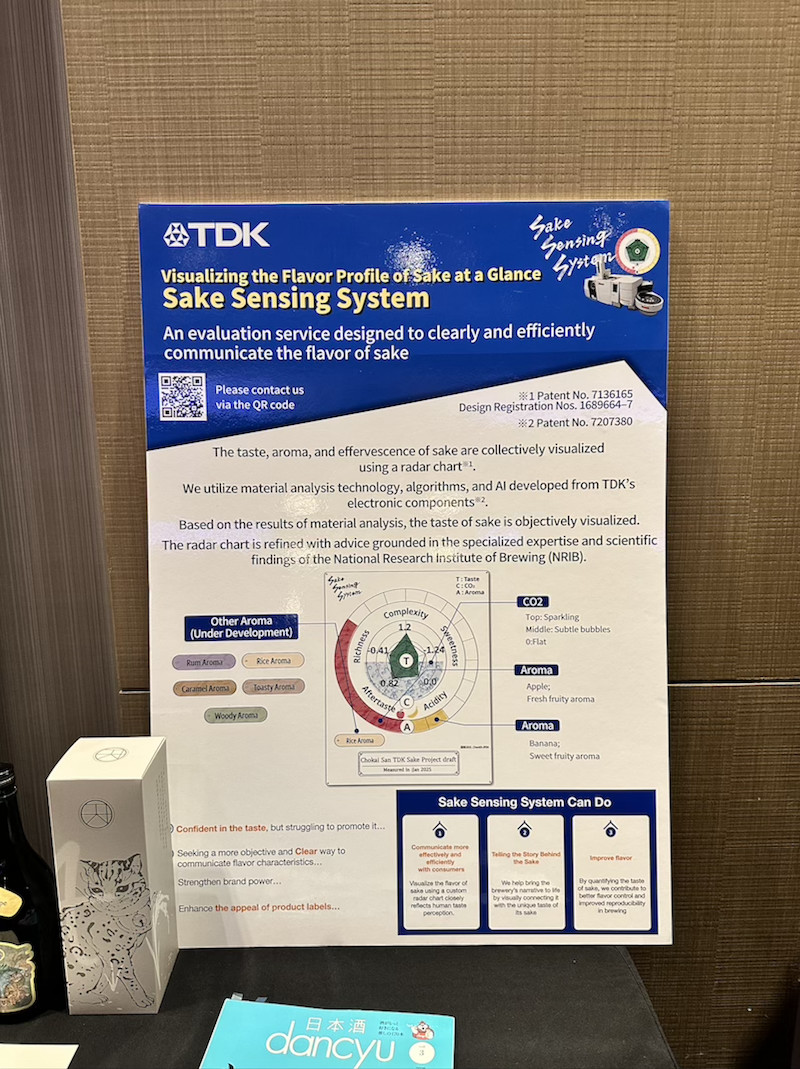
TDK 的Sake Sensing System 系統介紹
TDK 是日本知名的電子元件與材料技術企業,您的手機裡面的陀螺儀有可能就是他們做的,近年也將感測與分析技術應用於日本酒領域。透過 Sake Sensing System(SSS),TDK 嘗試結合酒液中的化學成分與感官評價資料,將清酒的香氣、甜酸平衡及口感特徵,轉換成更容易理解的客觀圖表。
平常我們使用「清爽」、「圓潤」、「果香豐富」或「酸度明亮」等詞彙。雖然感受真實的,但每個人的味覺經驗不同,容易造成主觀差異。這次測試讓我們有機會把「天衡」放進更大的清酒風味資料脈絡中比較,這套SSS 系統已經跑過上千種日本清酒,其中不乏知名品牌,也被日本知名餐飲媒體Dancyu 實際製作過專題測試。
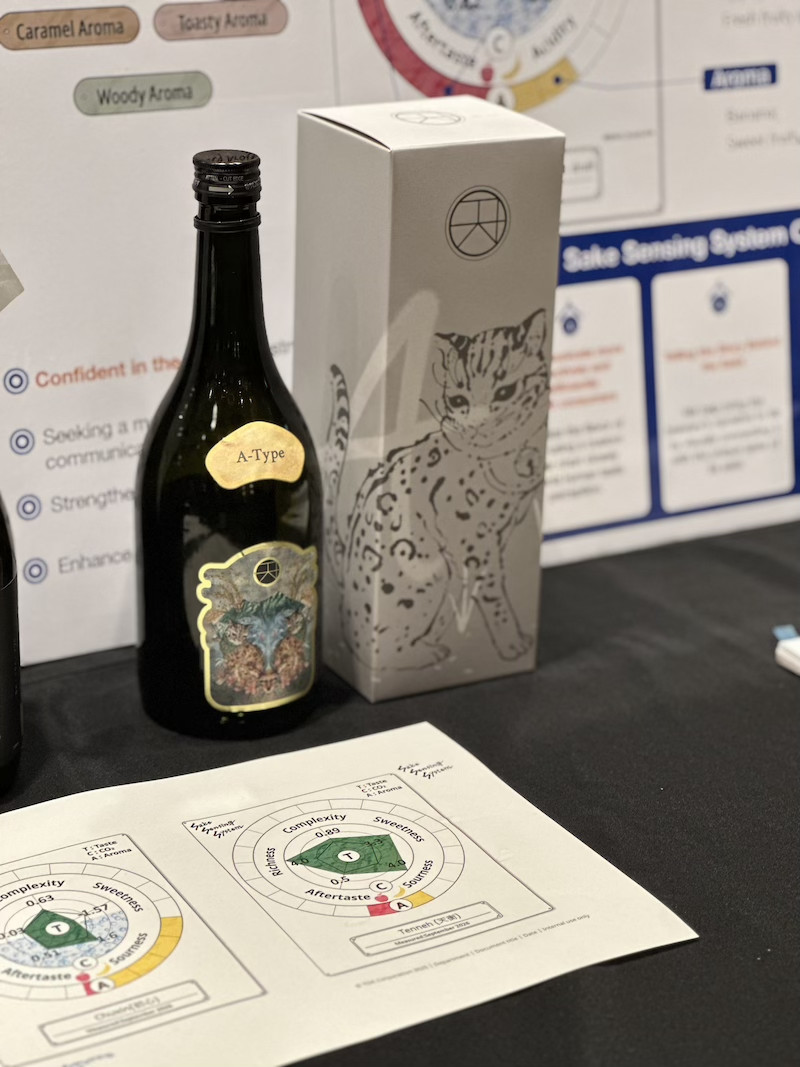
天衡第三年使用的是葡萄酒酵母,實驗性強大的同時,希望呈現的是酸度明亮、酒體輕盈的清酒,而結果也確實反映在圖表中。研究員兼森先生甚至帶著鼓勵的語氣說,我們的酸度跟新政非常接近,可以再嘗試調整看看其他部分(這個其他部分真是意昧深長😆),令我們受寵若驚。
天衡 A-Type 與SSS檢測資料
分析的價值在於能夠誠實面對各種問題面向,無論好壞。對規模仍小的天衡而言,每一次分析與交流,都是非常珍貴的學習。就在整理這些測試資料的同時,天衡第四年的釀造工作已經展開。今年我們繼續挑戰新的原料與釀造條件,包括使用精米步合達 35% 的台南21號,進一步探索台灣清酒的可能性。
新一年的酒正在發酵中。
When TENHEN meets TDK’s Sake Sensing System
Recently, TENHEN had a wonderful opportunity to look at our own sake from a completely different perspective.First of all, we’d like to express our gratitude to TSSA for giving TENHEN the opportunity to participate in a flavor analysis conducted by TDK.
We’d also like to thank Mr. Kanemori and the TDK team for their time and effort, allowing us to revisit our own sake through scientific data. TDK is a well-known tech company specializing in electronic components and materials. In fact, there’s a good chance that the gyroscope in your cellphone was made by TDK!
In recent years, TDK has also applied its sensing to the world of sake. Through its Sake Sensing System (SSS), TDK combines chemical analysis with sensory evaluation data to translate the aromas, sweetness, acidity, and overall flavor characteristics of sake into objective, easy-to-understand visual charts.
When describing sake, we often use words like “refreshing,” “smooth,” “fruity,” or “bright acidity.” While these impressions are certainly real, everyone’s sensory experiences are different, making such descriptions subjective.
This analysis gave us a rare opportunity to place TENHEN within a much broader landscape of sake flavor profiles. The SSS has already analyzed over a thousand different Japanese sake, including many well-known labels. The system has even been featured in a special tasting project by dancyu, one of Japan’s most respected food and dining magazines.
For TENHEN’s third brewing year, we experimented with wine yeast. While the approach was highly experimental, our goal was quite clear: to create a sake with bright acidity and a light, refreshing body.And the results did reflect much of what we had hoped to achieve!
Mr. Kanemori even offered some encouraging words, pointing out that our acidity index was remarkably close to that of Aramasa, and suggesting that we might try adjusting a few other aspects of the sake. (other aspects was rather intriguing… 😆) Coming from someone with such extensive experience analyzing sake, that comparison was both surprising and incredibly encouraging. We were genuinely honored!
To us, the real value of scientific analysis lies in being able to look honestly at every aspect of our sake, whether the results are good, bad, or somewhere in between.
As a very small sake producer, every opportunity to learn through analysis, research, and exchanges with experienced professionals means a great deal to us.
And while we’ve been reviewing these results, TENHEN’s fourth brewing season has already begun!
This year, we’re continuing to explore new ingredients and brewing conditions. One of our biggest challenges is working with Tainan No. 21, Taiwan’s newly developed sake-brewing rice variety, polished down to an impressive 35% rice ratio (seimai-buai). It’s another step in our ongoing exploration of what Taiwanese sake can become.
The 4th season of TENHEN is fermenting. And we can’t wait to see how it turns out.
